
Farm to Table Initiative
Led by Nakusheka Kapitango
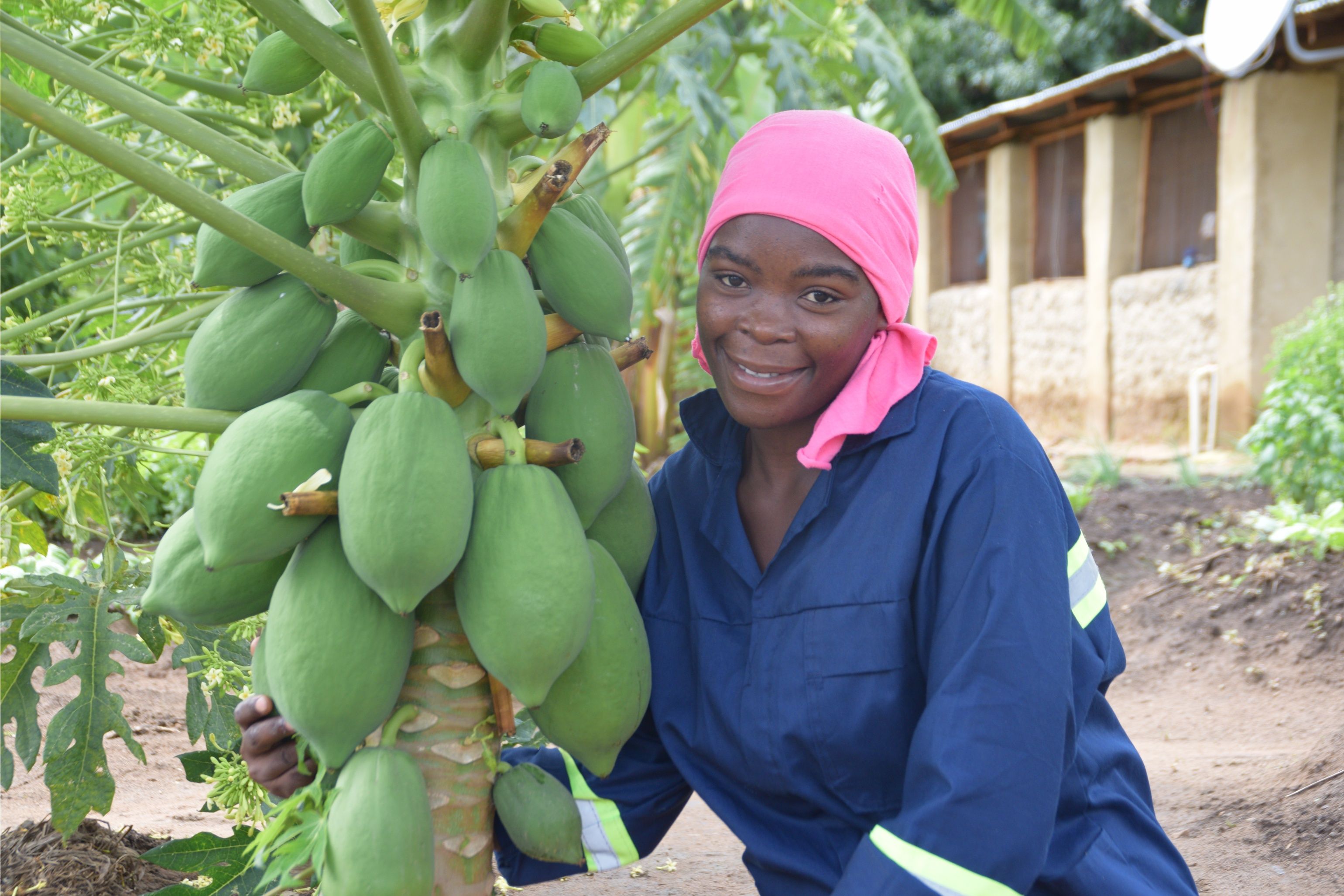
Three years ago, Nakusheka Kapitango was digging 1.5-metre wells by hand and cutting down trees to make fencing so the cattle wouldn’t eat the fresh crops. Today she sells her vegetables at good prices. “With the income we earn, we can successfully support our families” she says. “Our children are going to school well-fed, they have snacks to carry with them, and we can now easily afford to pay their school fees.”
Nakusheka Kapitango tells her story
“My name is Nakusheka Kapitango, and I am from the Lukoshi Garden initiative. Before we started this project, we only had a small garden. To protect it, we had to cut down trees to build fences out of grass and thorny branches just to keep the cattle from getting in and destroying our crops.
Water was also a major challenge. We relied on hand-dug wells that were only about 1.5 meters deep. Because they were shallow, they dried up quickly. Digging them any deeper was incredibly difficult because, as women, it required more manual labor than we could manage on our own.”
After only three years, everything changed
The gardens that exist now look nothing like that. The Lukoshi Garden is in its third year. The fences are wired and the wells go down eight meters. There’s also growing a variety of crops: if one kind doesn’t survive, the others will.
This transformation didn't happen in isolation. It is part of a network of communal regenerative gardens that has grown substantially since the first women-led pilots were established in 2023 by BLC. Seven new gardens, primarily funded by WWF, became fully operational in March 2025. Every garden is now equipped with shallow protected wells and manual foot pumps fed by groundwater which is recharged through the check dams upstream. There is no expensive machinery and no dependency on fuel. And the best of all, the pumps are maintained by the communities themselves.
150 families have food, income and can afford education
Together, the network now reaches approximately 150 families with fresh produce, even through the dry season. While previously, irrigation was out of reach for anyone who couldn't afford a private borehole.
Nakusheka Kapitango explains further: “With our gardens secure from animals and a reliable water source, we have learned the benefits of intercropping. Instead of planting just one type of crop, we now grow a variety of vegetables in the same garden. We are currently growing okra, impwa (local garden eggs), eggplant, pumpkin leaves, tomatoes, rape (green leafy kale) and cabbage.
By mixing our crops, we ensure that whenever a customer visits, everything they need is available in one place. Because of this variety, a great market has opened up for us, and we are now able to sell our vegetables at good prices.”
Expanding training and capacity
The Mulendema Demonstration Farm, at the heart of the broader Farm to Table Initiative, continued to supply training and serve as a model for the network. In 2025, it received solar panels to increase pump capacity during overcast days, and soil improvement campaigns using manure and black soil to address nutrient depletion identified in 2024.
A firm base, even in drought
The 2025 drought tested the supply chain. Green Safaris lodges and Zambia Conservation Partnership, the tourism buyers that BLC links the gardens to, saw less consistent supply than in previous years. So, therefore, they shifted their strategy deliberately from profit to food security to make sure the 150-plus farmers had enough to eat. Now we can say that the Lukoshi supply held. BLC buys produce directly and brings it to the park's tourist lodges at a premium price. The middlemen are gone and the income goes straight to the women who grew it.
Pride for the community
Nakusheka says the garden has become a point of pride for the whole community. People come by to look at it. And people don't just come to buy: they come to see what's possible. There's even, she says, a bit of friendly competition now between gardens.
After only three years, Nakusheka’s children go to school well-fed, with extra snacks to take with them. Three years ago she was digging shallow holes in dry ground and hoping for rain. Now she's supplying a safari lodge.
Project at a glance
Location
Lukanga River catchment, Zambia
Programme phase
Phase 9; Scaling
Objective
To provide nutritious, organically grown vegetables for consumption year-round, with a potential of scaling and providing a livelihood income.
Families reached
Over 150 families with dry-season produce
Key milestone
7 additional gardens (March 2025)
Market buyers
Green Safaris lodges, Zambia Conservation Partnership (ZCP)